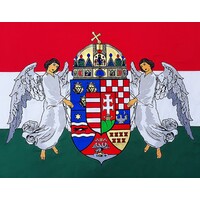

🏠 Magyar Otthon / Magyar Ház
Category: Places & Community
Status: 🟡 Research in Progress
Location: 734 Beaufort Street, Mount Lawley, Western Australia
Community use from: 18 February 1968
For generations of Hungarians in Western Australia, the Magyar Otthon — often referred to simply as the Magyar Ház — has been one of the most recognisable physical places associated with organised Hungarian community life in Perth.
Its story, however, begins before the present building became the Hungarian community's home.
This page aims to gradually reconstruct that history: how the organisations behind it developed, how the property was acquired, who helped establish and maintain it, what happened there, and what the building has meant to different generations.
📅 The Story So Far
1950 — Mindszenty Közművelődési Egyesület
A published historical account records the establishment of the Mindszenty Közművelődési Egyesület in Perth in August 1950.
The organisation was led by Kóra Endre and operated until August 1952.
This appears to represent an important early stage in the development of organised Hungarian community life in Western Australia.
1954 — Magyar Ház Részvénytársaság
In January 1954, the Magyar Ház Részvénytársaság was established.
The name is particularly interesting because it indicates that the idea of establishing a Hungarian community home or Magyar Ház existed well before the acquisition of the present Beaufort Street property.
Further research is needed into how this organisation operated, who participated in it, how funds were raised and what plans existed for establishing a permanent Hungarian home.
1955 — Nyugat-Ausztráliai Magyar Egyesület
In October 1955, the organisation adopted the name:
Nyugat-Ausztráliai Magyar Egyesület
The historical account identifies Vajda Aladár as president during this period.
1960 — Incorporation
In 1960, the organisation obtained incorporated status under the name:
Australian-Hungarian Association of WA (Inc.)
The surviving historical account states that its constitution was approved by the Australian authorities.
This represented another important step in establishing the organisation as a formal and continuing institution.
🏡 1967 — A Permanent Home
The property at 734 Beaufort Street, Mount Lawley was acquired by the Association in 1967.
This was an important development.
After years of organising community life without a permanent home, Western Australia's Hungarian community now had a physical place that could become a centre for gatherings, cultural activities and community organisations.
🇭🇺 18 February 1968 — Magyar Otthon
According to the published historical account, the Beaufort Street property was made available to the Hungarian community on:
18 February 1968
under the name:
MAGYAR OTTHON
This gives us an important historical date for Western Australia's Hungarian community.
The building has therefore been associated with Hungarian community life in Perth for more than half a century.
🎉 What Happened at the Magyar Otthon?
Over the decades, the Magyar Otthon has been associated with Hungarian national commemorations, cultural activities and social gatherings.
Historical accounts identify commemorations including:
🇭🇺 15 March
🕯️ Heroes' Day
🇭🇺 Trianon commemorations
👑 St Stephen's Day — 20 August
🕯️ the Martyrs of Arad
🇭🇺 commemorations of the 1956 Hungarian Revolution
The building has also hosted many other social and community activities.
But an official list of events can only tell part of the story.
We would also like to document what ordinary community life at the Magyar Otthon actually looked like.
📷 Do You Remember the Magyar Otthon?
Perhaps you remember:
💃 dances and balls
🍲 Hungarian meals
🎄 Christmas celebrations
🐣 Easter gatherings
🎵 musicians and performances
🧒 children's activities
🏫 Hungarian language classes
🇭🇺 national commemorations
👰 weddings
🎂 birthdays and family celebrations
🤝 meetings and community organisations
🛠️ working bees and volunteers maintaining the property
Your memories can help document aspects of community life that may never appear in official records.
👷 Who Built and Maintained It?
Buildings do not maintain themselves.
Behind the Magyar Otthon were generations of volunteers, committee members, tradespeople, cooks, cleaners, gardeners, organisers and community members.
We would particularly like to identify the people who:
-
helped purchase the property
-
raised funds
-
renovated or extended the building
-
donated materials
-
carried out building work
-
maintained the property
-
organised events
-
prepared meals
-
maintained the library or collections
-
volunteered behind the scenes.
Their contributions are part of the history too.
🏗️ How Has the Building Changed?
The Magyar Otthon visible today may not look exactly as it did in 1968.
We would like to reconstruct:
What did the original property look like?
What buildings were originally on the site?
When were alterations or extensions made?
Who carried out the work?
How was it funded?
What rooms existed at different times?
When was the library established?
Old photographs may answer many of these questions.
📚 The Library and Historical Collections
The Magyar Otthon has also contained a Hungarian library and other community material.
An important part of this History Project will be identifying what historical records, books, photographs, newsletters and other material have been accumulated there over the decades.
These collections may provide important evidence about the development of Hungarian life in Western Australia.
🏛️ A Continuing Community Place
The Magyar Otthon remains in use.
The Hungarian Embassy in Canberra, for example, identified 734 Beaufort Street, Mount Lawley as the location of its Perth consular days in both 2024 and 2025.
The building therefore continues to serve practical as well as cultural and community functions.
🔨 Recent Investment
The history of the building is continuing.
Western Australian Government records show that the Hungarian Association of WA received $62,655 through the 2023–24 Community Capital Works Fund for:
“Refurbishment of the Hungarian Community Hall and Library.”
This should eventually form part of the building's longer renovation chronology.
❓ Questions Still to Answer
There is much more to discover.
We would particularly like to establish:
-
Who were the founders of the Magyar Ház Részvénytársaság?
-
How did it operate?
-
How was money raised for a permanent community home?
-
Who negotiated the purchase of the Beaufort Street property?
-
What was the purchase price?
-
What was originally on the property?
-
Who contributed financially?
-
Who carried out early renovations?
-
What major extensions or alterations occurred?
-
When was the library established?
-
Which organisations have used the Magyar Otthon?
-
Which cultural groups were based there?
-
What significant community events took place there?
-
What photographs survive from the 1960s, 1970s, 1980s and 1990s?
-
What documents relating to the property's acquisition and development survive?
📜 Do You Have Something That Can Help?
We are particularly interested in:
📷 photographs
📜 property documents
🎟️ event tickets
📃 programs
✉️ correspondence
📰 newspaper articles
🧾 fundraising records
🏗️ renovation photographs
📖 newsletters
🎥 videos
🎙️ personal recollections
Even an unidentified photograph showing the Magyar Otthon may contain clues about when alterations were made.
📚 Sources & Further Research
Külhoni Magyarok — Nyugat-Ausztráliai Magyar Egyesület / Magyar Otthon
A published historical account records the organisational chronology beginning with the Mindszenty Közművelődési Egyesület in 1950, followed by the Magyar Ház Részvénytársaság, the Nyugat-Ausztráliai Magyar Egyesület, incorporation in 1960, purchase of the Beaufort Street property in 1967 and its opening as the Magyar Otthon on 18 February 1968.
Embassy of Hungary, Canberra
Official consular announcements identify the Magyar Otthon, 734 Beaufort Street, Mount Lawley as the venue for Perth consular services in 2024 and 2025.
Parliament of Western Australia
WA Government records identify a $62,655 Community Capital Works Fund allocation for refurbishment of the Hungarian Community Hall and Library.
🧩 Help Complete the Story
The building is only one part of the history.
The more important story is the generations of people who created, maintained and used it.
