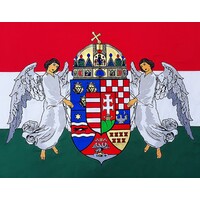

🇭🇺 Hungarian Association of Western Australia & Magyar Otthon
A Long-Standing Part of Hungarian Community Life in Western Australia
The Hungarian Association of Western Australia (HAWA) — Nyugat-Ausztráliai Magyar Egyesület — is one of the longest-established Hungarian community organisations in Western Australia.
Its history is closely connected with the development of Magyar Otthon (Hungarian House) in Mount Lawley, which has provided a physical meeting place for Hungarian community life across generations.
📜 Historical Development
Published historical sources document several stages in the development of organised Hungarian community life in Western Australia.
Research methodology: Historical information on this page is based on identifiable sources where available. Digital and AI-assisted research tools may be used to locate, organise and compare source material, but are not treated as historical evidence. See Research, Sources and Use of AI for the portal's methodology.
1950 — Mindszenty Közművelődési Egyesület
The Mindszenty Közművelődési Egyesület was established in August 1950 under the presidency of Endre Kóra and operated until August 1952.
1954 — Magyar Ház Részvénytársaság
In January 1954, the Magyar Ház Részvénytársaság was established.
1955 — Nyugat-Ausztráliai Magyar Egyesület
In October 1955, the organisation became known as the Nyugat-Ausztráliai Magyar Egyesület, with Aladár Vajda identified in the historical record as its president.
1960 — Incorporation
In 1960 the organisation obtained incorporated status as the Australian-Hungarian Association of WA (Inc.).
🏠 The Development of Magyar Otthon
A major achievement of the earlier Hungarian community was the establishment of a permanent community home.
In 1967, the Association purchased the property in Beaufort Street, Mount Lawley.
Published historical accounts state that the property was acquired through community fundraising, donations and a loan, without government assistance.
On 18 February 1968, the property was formally opened for use by the Hungarian community as:
Magyar Otthon — Hungarian House
The establishment of Magyar Otthon provided the community with a permanent physical location for cultural, educational, social and community activities.
🤝 A Home for Community Organisations
Historical descriptions of Magyar Otthon identify a number of Hungarian organisations and activities that used the facility.
These included, at different times:
-
Hungarian Scouts,
-
Keszkenő Hungarian Folk Dance Group,
-
Hungarian language education,
-
Catholic community activities,
-
Reformed and Lutheran community activities,
-
women's organisations,
-
cultural celebrations,
-
dances and social events,
-
and other Hungarian community groups.
A KCSP profile of the Association specifically described Magyar Otthon as not operating simply as a members-only club, but as a place welcoming people of Hungarian background and others supporting Hungarian community life.
This historical distinction is important when documenting the role Magyar Otthon has played in Western Australia.
🎯 Documented Organisational Objectives
Published information about the Association identifies objectives including:
-
encouraging goodwill and social relationships among Hungarians living in Australia,
-
strengthening relationships between the Hungarian and wider Australian communities,
-
providing social, cultural, educational and recreational activities,
-
encouraging friendship and cooperation,
-
supporting people and groups requiring assistance,
-
maintaining Hungarian language and cultural traditions in Western Australia,
-
and sharing those traditions with Australian society.
These objectives provide useful historical context for understanding the Association's intended community role.
🏛️ Magyar Otthon and HAWA
It is useful to distinguish between the two terms.
Hungarian Association of Western Australia (HAWA) refers to the incorporated organisation.
Magyar Otthon refers to the community property historically established and maintained by the Association.
The histories are closely connected, but they are not identical concepts.
Magyar Otthon also represents part of the physical legacy created through the fundraising, volunteering and community-building efforts of earlier generations.
🌏 Hungarian Government Diaspora Connections
Like many Hungarian diaspora organisations around the world, HAWA has participated in programs connecting overseas Hungarian communities with Hungary.
One example is the Kőrösi Csoma Sándor Program (KCSP).
The KCSP partner record for the Hungarian Association of Western Australia documents scholarship participants associated with the organisation across multiple years.
These programs provide personnel and community-development connections to participating Hungarian diaspora organisations.
👉 Kőrösi Csoma Sándor Program — HAWA profile
📰 Community Information and Publications
Historically, the Association has published Perthi Magyar Hírek (Perth Hungarian News).
Archived editions provide potentially valuable historical records of:
-
community events,
-
organisations,
-
celebrations,
-
announcements,
-
community members,
-
cultural activities,
-
and changes within Western Australia's Hungarian community.
These publications can therefore contribute to documenting the broader history of Hungarian community life in Western Australia.
🌐 Current Information
For current information about the Hungarian Association of Western Australia, its activities and events:
👉 Hungarian Association of WA — Facebook
Where available, visitors should refer directly to the Association's own communication channels for current organisational information.
🗃️ Preserving the Historical Record
The history of HAWA and Magyar Otthon forms part of the wider history of Hungarian migration and community development in Western Australia.
The Magyars of WA aims to help identify, connect and preserve historical material such as:
-
photographs,
-
newsletters,
-
event programs,
-
historical correspondence,
-
community publications,
-
oral histories,
-
recollections,
-
organisational records that are appropriately available for historical research,
-
and information about earlier community organisations and activities.
Historical contributions should be clearly identified according to their source.
Where information represents personal recollection rather than documentary evidence, it should be presented as such.
🔎 Building the Historical Record Carefully
Community history often develops from multiple sources.
For this reason, information presented through The Magyars of WA should distinguish between:
📜 Historical Record — information supported by identifiable historical sources.
📄 Documentary Evidence — constitutions, newsletters, minutes, government records, photographs, programs and similar material.
🗣️ Community Recollection — memories and accounts contributed by community members.
🔎 Information Requiring Further Verification — material that may be historically valuable but has not yet been independently confirmed.
Different sources may sometimes provide different dates, descriptions or interpretations. Where this occurs, the difference should be documented rather than silently resolved.
💻 Physical and Digital Community Heritage
For earlier generations, establishing Magyar Otthon created a physical place where community life could occur.
Today's diaspora also has opportunities to preserve community knowledge digitally.
A digital community space can complement—not replace—physical organisations and meeting places by helping preserve:
-
community history,
-
photographs and documents,
-
organisational information,
-
cultural resources,
-
educational opportunities,
-
community contacts,
-
and links between generations.
The Magyars of WA is one example of exploring how a shared digital community resource can complement the physical and organisational infrastructure already developed by earlier generations.
🤝 Independent Organisations, Shared History
The Hungarian Association of Western Australia is an independent incorporated association.
The Magyars of WA is an independent community information, history and participation portal.
The Magyars of WA does not operate, govern or represent HAWA, and HAWA does not operate or control The Magyars of WA.
The inclusion of HAWA and Magyar Otthon on this portal reflects their historical significance within Western Australia's Hungarian community and does not imply organisational affiliation or endorsement.
HAWA and community members are welcome to provide corrections, additional sources and historical material so that this record can become more accurate and complete over time.
Magyar Otthon represents an important physical inheritance from earlier generations. Preserving the documentary history of how it was created, used and passed forward can help future generations understand the development of Hungarian community life in Western Australia.
