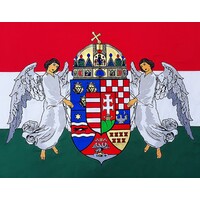

Culture & Community
Hungarian Culture, Stories and Connections in Australia
Hungarian cultural identity in Western Australia and Australia more broadly is expressed in many different ways — through food, sport, music, language, history, education, professional life and the stories of individuals.
This page brings together examples, stories and resources that may be of interest to Western Australia's Hungarian diaspora.
It is not intended to define what Hungarian culture is. Rather, it provides a place to discover and share some of the many ways Hungarian heritage continues to connect with Australian life.
💡 Ideas for Consideration
Earlier generations established important social and cultural institutions that helped Hungarian migrants build connections and preserve their heritage.
As the community changes, it may also be worth exploring additional forms of connection alongside traditional cultural activities.
These could include:
-
professional and business networking,
-
mentoring between established and newly arrived professionals,
-
connections between students and professionals,
-
sport and recreation,
-
historical and heritage projects,
-
digital community networks,
-
opportunities for younger generations,
-
knowledge-sharing about Australian institutions and community life.
This does not require replacing existing cultural activities or organisations.
Instead, it raises a broader question:
What additional forms of connection could help today's Hungarian diaspora share knowledge, skills, experience and opportunities across generations?
📖 Hungarian Language & Literature
Hungarian culture is expressed not only through music, dance, food and community traditions, but also through its language and literature.
For communities living outside Hungary, maintaining the Hungarian language provides access to something that translation cannot always reproduce completely: the rhythm, humour, expressions, literary traditions and ways of constructing meaning found in the original language.
Contemporary Hungarian literature also demonstrates that Hungarian culture is not simply something inherited from earlier generations. It continues to develop, travel and attract international recognition.
✍️ László Krasznahorkai — What the Hungarian Language Can Do
One of the most significant contemporary examples is László Krasznahorkai, who received the 2025 Nobel Prize in Literature. The Swedish Academy awarded him the prize for his literary body of work and its affirmation of the power of art. Nobel Prize
Krasznahorkai's writing is particularly interesting from the perspective of Hungarian language and culture.
His prose is famous for long, flowing sentences in which observations, memories, ideas, uncertainty and changing perspectives can accumulate before reaching a full stop.
For Hungarian readers, this provides an opportunity to experience what a writer can accomplish within the structures, rhythms and possibilities of the Hungarian language.
For readers encountering his work through translation, it also raises an interesting cultural question:
What happens to a work of literature when the language changes, and what can only be fully experienced in the original?
This makes Krasznahorkai relevant to a diaspora community for reasons extending beyond his Nobel Prize.
His international success demonstrates that Hungarian remains a living literary language whose works can originate in Hungarian and travel far beyond Hungary.
🌍 From Hungarian to the World
Literature is one way in which culture can cross borders without completely leaving its place of origin behind.
A Hungarian work can be:
written in Hungarian → translated → read internationally → interpreted by different cultures → discovered again by later generations of Hungarians abroad
For Hungarian Australians, this relationship between language and translation has particular significance.
A person does not need to speak Hungarian fluently to participate in Hungarian culture.
But preserving and learning the language provides another level of access to that culture.
That includes:
literature • poetry • songs • humour • family stories • historical documents • newspapers • correspondence • expressions that are difficult to translate
Krasznahorkai therefore provides a contemporary example of why language preservation is not only about preserving the past.
It can also provide access to Hungarian culture being created today.
🎥 Watch, Read & Listen
Rather than only describing Krasznahorkai's work, these resources allow visitors to encounter the writer, his language and the international reception of contemporary Hungarian literature directly.
🏅 Nobel Prize Presentation — 2025
Krasznahorkai received his Nobel Prize medal and diploma at the Nobel Prize Award Ceremony in Stockholm on 10 December 2025. Nobel Prize
🔗 László Krasznahorkai — Nobel Prize in Literature 2025
Official Nobel Prize material including information about the prize, award ceremony and Krasznahorkai's work.
🎙️ Nobel Lecture
Krasznahorkai's Nobel lecture is particularly valuable for a Hungarian diaspora cultural resource because the Nobel Foundation makes the text available in Hungarian and English, allowing the two versions to be explored alongside each other. The official page notes that the lecture video is incomplete because of technical difficulties, but provides the complete written text. Nobel Prize
🔗 László Krasznahorkai — Nobel Prize Lecture
Read Krasznahorkai's Nobel lecture in Hungarian or English and explore his characteristic use of extended literary form.
🎧 Krasznahorkai, His Books and the Hungarian Literary World
The Hungarian publication 444's Nem rossz könyvek discussion with Krasznahorkai's long-term editor János Szegő explores Sátántangó, the editing of Krasznahorkai's unusual prose, translation, humour, his collaboration with Béla Tarr and what the Nobel Prize could mean for Hungarian literature internationally. 444
🔗 Krasznahorkai művei és az a fájdalmasan nevetséges világ, ami körbevesz minket — 444
🎤 Krasznahorkai After the Nobel Announcement
444 also documented Krasznahorkai's first radio comments after the announcement of the prize, including an embedded opportunity to hear his responses in English. 444
🔗 Krasznahorkai: „Nagyon boldog vagyok! Nyugodt vagyok és nagyon ideges egyszerre” — 444
💡 Why This Matters in the Diaspora
Hungarian language preservation is sometimes discussed primarily in terms of preventing something from being lost.
There is another way of looking at it.
Learning and maintaining Hungarian also gives future generations access to things that have not yet been created.
The next Hungarian novel, poem, film, song or cultural movement does not yet exist.
Language therefore connects diaspora communities not only with their inheritance, but also with the continuing cultural life of Hungary and Hungarian-speaking communities around the world.
Krasznahorkai's international recognition provides a powerful contemporary example.
Hungarian culture is inherited—but it is also still being created.
📚 Sources & Further Research
László Krasznahorkai provides one contemporary example of the relationship between Hungarian language, literature, translation and international cultural exchange.
This section can gradually expand to document other writers and literary traditions, including Hungarian-language literature originating outside the present borders of Hungary and connections between Hungarian literature and Australia.
Online Sources
🔗 László Krasznahorkai — Nobel Prize in Literature 2025
Official Nobel Prize information about the 2025 Literature Prize, Krasznahorkai's work and award material.
🔗 László Krasznahorkai — Nobel Lecture
Official lecture material available in Hungarian and English.
🔗 Krasznahorkai művei és az a fájdalmasan nevetséges világ, ami körbevesz minket — 444
Hungarian-language discussion with editor János Szegő about Krasznahorkai's writing, editing, translation and literary significance.
🇭🇺 Help Document Hungarian Language & Literature in WA
Hungarian literary culture in Western Australia may also survive in private bookshelves, family collections, community publications and personal memories.
If you have material relating to Hungarian language and literature in WA, we welcome:
- 📚 Hungarian books and private collections
- 📰 Hungarian-language newspapers and magazines
- ✍️ information about writers, poets and translators
- 🎓 memories of Hungarian-language education
- 🎭 literary readings and cultural events
- 📖 books passed between generations
- ✉️ Hungarian-language letters and correspondence
- 🎙️ recollections of learning, maintaining or rediscovering Hungarian
- 🔎 corrections and additional historical sources
👉 Contribute to the Community Archive
👉 Research, Sources & Editorial Methodology
This also gives us a useful standard template for future Culture features: cultural introduction → featured person/work → why it matters to diaspora → watch/read/listen → standard Sources & Further Research → WA community archive contribution.
⚽ Ange & The Boss
Puskás in Australia
Ange & The Boss explores the remarkable period when Hungarian football legend Ferenc Puskás coached South Melbourne Hellas in Australia.
Puskás coached the club during the late 1980s and early 1990s and led South Melbourne to the 1991 National Soccer League championship.
The story provides an interesting connection between Hungarian sporting heritage, Australian football and migrant identity.
Documentary website:
https://angeandtheboss.com/
⚽ Les Murray's Mission
Les Murray became one of Australia's best-known football broadcasters and was an important figure in the development and promotion of Australian football.
His Hungarian background also makes his story particularly relevant to Australia's Hungarian migration story.
Part 1
https://www.youtube.com/watch?v=8c3qbX4yL1k
Part 2
https://www.youtube.com/watch?v=3Q8Q2pCoMiI
🍲 Hungarian Food and Community Stories
Food is one of the ways cultural knowledge can be preserved and passed between generations.
Locally Created Hungarian Cookbook by Ilka
[Keep your existing cookbook image/information here.]
Our State on a Plate — Cherry Sour Slice
[Keep existing link.]
Our State on a Plate — Stuffed Paprika Pepper
https://www.youtube.com/watch?v=KjffnCL4QXs
[Keep your existing Spotify item here, with its title/description if available.]
🎓 Hungarian Voices, Ideas and Public Lectures
Hungarian and Hungarian-born academics, authors, health professionals and public speakers have contributed to discussions in Australia and internationally.
These links are included as cultural and educational resources. Their inclusion does not constitute endorsement of particular medical, scientific or other professional claims.
Dr Gabor Maté — Perth Lecture
Dr Gabor Maté was born in Budapest in 1944 and later emigrated with his family to Canada.
He presented in Perth at the Riverside Theatre, Perth Convention and Exhibition Centre, on 4 February 2025.
Biography
Source: Penguin Australia
[Keep existing biography link.]
Dr Gabor Maté Website
[Keep existing event/website link.]
Magyarul
[Keep existing Hungarian-language video.]
In English
[Keep existing English-language video.]
Dr Schwab Richárd
Nagyon egyszerű módszerrel lehetünk sokkal egészségesebbek
[Keep existing video/resource here.]
🌐 Community Connections
The following online spaces provide information, discussion or activities relating to Hungarians in Western Australia.
Magyarok Perthben on Facebook
Hungarian Association of Western Australia on Facbook only
Other WA Hungarian Community Groups
Different pages and groups may be operated independently. Their inclusion here is for community information and does not mean that The Magyars of WA operates, represents or endorses those groups.
🌱 Help Build This Collection
Culture is not limited to traditional dance, food or historical events.
We would also like to document:
-
migration stories,
-
sporting achievements,
-
artists and musicians,
-
community organisations,
-
education,
-
Hungarian-Australian businesses and professionals,
-
historical photographs and documents,
-
books and publications,
-
family histories,
-
younger-generation experiences,
-
connections between Hungary and Western Australia.
If you know of a story, person, organisation, event or resource that could contribute to this collection, you are welcome to suggest it.
Where information concerns identifiable people, appropriate public sources or permission should be used before personal information is published.
A living culture is not only something inherited from the past. It is also what each generation contributes to the future.
