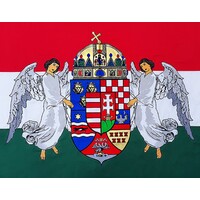

Hungarian Community Institutions in Western Australia
Historical development, organisational continuity and community participation
Open research working base · 19 October 2026
1. Central research questions
What forms of voluntary association, cultural education, and community organisation did Hungarian migrants encounter before leaving Hungary? How did migration waves, occupational and educational diversity, and social circumstances influence their Australian institutions? How did these institutions preserve, change or lose organisational capabilities across generations?
The research distinguishes an organisation's cultural activities, its formal constitutional purposes, its membership mandate, and any claim to represent a wider diaspora.
2. Hungarian institutional traditions
| Hungarian term | Historical meaning and research questions |
|---|---|
| Faluház | Village house: meetings, celebrations, education and social activities; historical uses vary. |
| Olvasókör / Népház | Reading circle / people's house: voluntary educational, social and literary associations, sometimes with restrictive membership. |
| Kultúrház / Művelődési ház | Culture house / community education centre: cultural programming, especially in the post-1949 state-directed network; local histories differ. |
| Munkásotthon / Egyesületi székház | Workers' home / association headquarters: worker, occupational and voluntary organisation facilities. |
| Népfőiskola | Folk high school: adult education and civic learning, with distinct regional and historical models. |
Research should distinguish voluntary pre-war institutions, transitional arrangements in 1945–48, and the expansion of state-supervised cultural houses from 1949 onwards.
3. Hungarian migration to Australia
Migration included pre-war arrivals, post-war displaced persons, 1956-era refugees, later migrants from Hungary and neighbouring countries, and post-1989 arrivals. These were not socially or politically uniform groups. Education, religion, occupation and previous institutional experience cannot be inferred from participation in folk dance, food or social gatherings.
Research priorities include settlement records, contemporary Hungarian-language newspapers, early association documents, oral histories and comparison with Hungarian organisations in other Australian states.
4. Reported WA organisational chronology — verification required
| Period | Reported event / evidence needed |
|---|---|
| 1950 | Mindszenty Közművelődési Egyesület: verify formation, activities and founding records. |
| 1954 | Magyar Ház Részvénytársaság: verify legal form, purpose and relationship to later bodies. |
| 1955 | Nyugat-Ausztráliai Magyar Egyesület: verify name, officers and records. |
| 1960 | Reported incorporation: compare contemporary legal and historical records. |
| 1967–68 | Magyar Otthon property acquisition and opening: verify title, dates and intended uses. |
The sequence should not be taken as proof of legal continuity between the bodies without documentary confirmation.
5. Competing explanations
Possible explanations for a predominantly cultural association include its original mission, settlement priorities, historical divisions, separate specialist organisations, generational change, property responsibilities, organisational inertia, and participation barriers. These hypotheses can overlap. None is a finding about the motives of any current or former officer.
6. What counts as development?
| Pattern | Meaning |
|---|---|
| Development | Improved capabilities, participation, succession, adaptation and organisational learning. |
| Stagnation | Little demonstrable renewal despite changing needs and circumstances. |
| Decline | Sustained deterioration in participation, finances, capabilities or delivery of purposes. |
| Stable specialisation | Deliberately narrow mission that is effectively and sustainably delivered. |
| Renewal | Documented rebuilding of participation, leadership, services or systems. |
Compare historical periods (for example 1968, 1980, 2000, 2010 and 2026) rather than assuming that a present-day snapshot establishes a trend.
7. Interactive organisational capability assessment
For each dimension, select a level only when evidence supports it. Scores are not submitted or stored by this page. This is a descriptive research tool, not a compliance verdict or public rating.
Assessed: 0 / 12 · Score: —
8. Evidence sought
Constitutions and amendments; membership statistics; committee and AGM records; financial reports; programs and attendance; property records; communications; volunteer induction and succession documentation. Contributors should indicate dates, provenance, publication permission and whether materials are firsthand records, recollections or interpretations.
9. Open questions
Was the community house originally the primary objective?
Compare founding constitutions, company documents, property plans and early activities before drawing a conclusion.
Did broader functions once exist and later disappear?
Look for libraries, lectures, settlement support, education, publications and inter-organisational collaboration.
Does long-serving leadership prove stagnation?
No. Investigate leadership renewal, transferability of responsibilities and continuity of documented organisational knowledge.
What would demonstrate decline?
A documented deterioration across comparable periods, with attention to the association's mission, external circumstances and data limitations.
10. Research references and further verification
- Australian Institute of Company Directors — Not-for-Profit Governance Principles (2024)
- ACNC Governance Standards (legal applicability must be checked)
- Australian Dictionary of Biography — Hungarian Immigration in Australia
- Borbándi Gyula — A magyar emigráció életrajza
- Külhoni Magyarok — Australia and Oceania
- Kulturális Szemle — Historical cultural houses
These are research leads, not a claim that every detail in the discussion has been independently verified.
11. Invitation to contribute
We welcome historians, migration researchers, archivists, organisational leaders, not-for-profit governance practitioners, volunteer managers and community members. Contributions, corrections, counterevidence and different interpretations are welcome. Please do not submit confidential membership lists, unpublished personal information or photographs without permission.
